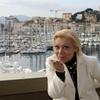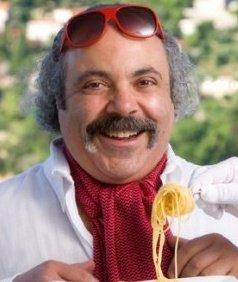
FRED PLOTKIN is one of America’s foremost experts on opera and has distinguished himself in many fields as a writer, speaker, consultant and as a compelling teacher. He is an expert on everything Italian, the person other so-called Italy experts turn to for definitive information. Fred discovered the concept of "The Renaissance Man" as a small child and has devoted himself to pursuing that ideal as the central role of his life. In a “Public Lives” profile in The New York Times on August 30, 2002, Plotkin was described as "one of those New York word-of-mouth legends, known by the cognoscenti for his renaissance mastery of two seemingly separate disciplines: music and the food of Italy." In the same publication, on May 11, 2006, it was written that "Fred is a New Yorker, but has the soul of an Italian."
He graduated with honors from the University of Wisconsin-Madison, where he had a double major in Italian Renaissance history and theater and opera production (as a student of Gilbert Helmsley). Fred studied at the DAMS conservatory (Italy’s Juilliard) of the University of Bologna and later, as a Fulbright Scholar, at the University of Pavia, which included work at La Scala. Fred has worked in opera since 1972, doing everything but singing. This includes management, production, design, coaching, consulting and broadcasting. He directed opera at La Scala and later was the performance manager of the Metropolitan Opera for five years. He has worked for some of the great opera companies of the world and collaborated with many top stars. He was a site inspector for the National Endowment for the Arts, bringing his managerial expertise to more than 20 US opera companies.
Fred is a popular presence on the intermission features of the Metropolitan Opera international radio broadcasts. He teaches a series at the Casa Italiana Zerilli-Marimò of NYU called “Adventures in Italian Opera” which has a big following. Many great singers and conductors have been his guests for those evenings. His seminars at the Metropolitan Opera Guild are always sold out and he has lectured about opera for the Metropolitan Museum of Art, BAM, the Smithsonian, the Morgan Library, the Los Angeles Opera, the Wagner Society of Southern California, the Salzburg Festival and the Maggio Musicale Fiorentino. He is a popular pre-concert lecturer for the New York Philharmonic and has also spoken for other important orchestras in the USA and Europe. Plotkin leads opera/food trips in Italy, Austria, France and New York. He has recorded audio books and done narration in concert programs, most recently Ogden Nash’s poems inspired by Saint-Saëns’s “Carnival of the Animals.”
His book, Opera 101: A Complete Guide to Learning and Loving Opera is the best-selling standard text in America on the art form. Classical Music 101: A Complete Guide to Learning and Loving Classical Music is well-respected in the USA and has had important editions in the UK and China. Fred has written program notes and articles for the Metropolitan, Chicago Lyric, Los Angeles and Cincinnati opera companies, Carnegie Hall, The Atlantic, Playbill, Stagebill, Opera News, Das Opernglas, The New York Times, Los Angeles Times, The Guardian, and Daily Telegraph.
He has a Master’s degree in journalism from Columbia University, where he specialized in broadcasting and arts reporting. He has appeared on many radio programs on RAI, Radio France, BBC, Radio Canada, and NPR. Fred was featured prominently on WNYC’s award-winning “The Ring and I” (a program he named) about those special people who often see every aspect of life filtered through the music and stories of Wagner’s great tetralogy.
Fred has written six renowned books on Italian cuisine (including the classics Recipes from Paradise: Life and Food on the Italian Riviera; The Authentic Pasta Book; La Terra Fortunata: The Splendid Food and Wine of Friuli-Venezia Giulia). The fifth edition of his Italy for the Gourmet Traveler was published in June 2010 by Kyle Books. It is the most complete book for visitors to Italy who are interested in that country’s peerless food and wine heritage. He has written and been interviewed about wine and gastronomy in The New York Times, Los Angeles Times, Bon Appétit, Food & Wine, Gastronomica, Gourmet, Wine Enthusiast, and other leading publications. He has been a finalist for the Julia Child, James Beard and IACP cookbook awards and is a judge for the Beard awards.
Fred Plotkin lives in airplanes, opera houses, Manhattan, and cyberspace (www.fredplotkin.com).
Fred Plotkin presents his annual analysis of what lies ahead at America’s leading opera house.
Fred Plotkin honors the most creative and transformational work of 2020.
Fred Plotkin's rituals for coping with the pandemic? Cooking, film, and, of course, opera.
Many friends and readers have asked me to share music for them to listen to just now.
On Earth Day, and every day, it’s good to see how some works deepen the emotions we experience in the presence of nature
What would a greener world of opera look like?
What operas have you been dreaming of?
Fred Plotkin on opera and feelings of solidarity with Northern Italy in light of the ongoing COVID-19 pandemic.
Musicians in Opera and Classical Music in the Time of Coronavirus
Fred Plotkin celebrates the women who are (and have been) making waves in music and more.
Ultimately, the quality of any opera company’s offerings rises and falls on who is singing. In this regard, the upcoming season is very promising.
There simply was no one like Mirella Freni, and I doubt there ever will be again. Addio, collega.
Fred Plotkin on the operatic art of film director Federico Fellini, in honor of his 100th birthday.
All the opera around the world to see this winter and spring.
Fred Plotkin honors the passion, beauty and intensity of British soprano Elizabeth Llewellyn.
Fred Plotkin honors outstanding and memorable achievements in opera in 2019.
Fred Plotkin pays tribute to the late, great opera singer's talent and pursuit of understanding the human condition.
What the Palmetto State gave us, in opera terms.
Wise words to and from your opera favorites.
Conducting for the opera is a very different task than conducting a symphony. We catalogued those who have mastered the art.